Posted on

How to Tag Contact Form 7 Subscribers in Mailchimp (2026 Guide)

Chimpmatic lets you automatically tag Contact Form 7 subscribers in Mailchimp the moment they submit a form. Enter a tag name in the Chimpmatic tab of your CF7 form, and every submission adds that tag to the subscriber’s Mailchimp profile — no code, no manual sorting. With Chimpmatic Pro, you can assign different tags based on dropdown selections, checkboxes, or radio buttons within the same form.

Last updated: February 2026

What Are Mailchimp Tags?

Tags are internal labels you attach to contacts in your Mailchimp Audience. Unlike groups (which subscribers can see and choose on signup forms), tags are invisible to your contacts. Only you and your team see them.

Tags let you categorize subscribers by source, behavior, interest, or any other criteria without creating separate Audiences. When Chimpmatic sends a form submission to Mailchimp, it can include one or more tags that are automatically applied to the subscriber’s profile.

Common tag use cases:

  • Source tracking: Source:Website, Source:Landing-Page, Source:Webinar
  • Interest tracking: Interest:SEO, Interest:Email-Marketing, Interest:Ads
  • Lead scoring: Lead:Hot, Lead:Cold, Lead:Qualified
  • Automation triggers: Ebook-Requested, Quote-Request, Webinar-Feb-2026

Tags vs. Groups vs. Segments

Mailchimp offers three ways to organize contacts. They serve different purposes and are not interchangeable.

Feature Tags Groups Segments
Visibility Internal only (contacts cannot see them) Can be shown on signup forms Internal only (filter results)
Who assigns them You, your team, or integrations (like Chimpmatic) Subscribers choose from predefined options Mailchimp auto-assigns based on conditions
Persistence Static — stays until manually removed Static — stays until subscriber changes preference Dynamic — updates automatically as conditions change
Trigger automations Yes (“Tag added” trigger) Yes (“Joins group” trigger) No (segments are filters, not triggers)
API support Full — add/remove via POST /lists/{id}/members/{hash}/tags Limited — set via member interest categories No direct API — Mailchimp computes dynamically
Chimpmatic support Lite: static tags. Pro: static + dynamic tags Pro only N/A (managed in Mailchimp)
Best for Internal categorization, automation triggers, source tracking Subscriber preferences, interest selection Campaign targeting, engagement filtering

Rule of thumb: Use tags for anything the subscriber should not see (source, lead score, internal status). Use groups for anything the subscriber should choose (newsletter preferences, content topics). Use segments to combine tags, groups, and engagement data into targetable audiences for campaigns.

Static Tagging: One Tag Per Form (Lite + Pro)

Static tagging is the simplest approach. Every subscriber who submits a specific CF7 form receives the same tag. If you have five forms, each one applies a different tag.

CF7 Form Tag Applied Purpose
Newsletter signup Newsletter Identify newsletter subscribers
Contact form Contact-General Track general inquiries
Ebook download Ebook-SEO-Guide Trigger lead magnet delivery
Quote request Quote-Request Route to sales follow-up
Webinar registration Webinar-Feb-2026 Trigger webinar confirmation sequence

Static tagging is available in both Chimpmatic Lite (free) and Pro. You can apply multiple static tags to the same form by entering them comma-separated in the Tags field (e.g., Newsletter, Source:Website).

Dynamic Tagging: Tags Based on Form Fields (Pro)

Dynamic tagging is a Chimpmatic Pro feature that assigns different tags based on what the subscriber selects in the form. Instead of every submission getting the same tag, the tag changes depending on dropdown values, checkbox selections, or radio button choices.

Example: Contact Form with Department Routing

Your CF7 form has a dropdown field [select department "Sales" "Support" "Billing"]. With dynamic tagging, Chimpmatic maps each option to a different tag:

Dropdown Selection Tag Applied Automation Triggered
Sales Inquiry-Sales Send product brochure + demo link
Support Inquiry-Support Send knowledge base links
Billing Inquiry-Billing Send billing portal link

One form, three completely different tags and automations. Without dynamic tagging, you would need three separate CF7 forms to achieve the same result.

Example: Interest-Based Tagging with Checkboxes

Your CF7 form has checkboxes for interests: [checkbox interests "SEO" "Email Marketing" "Social Media" "PPC"]. With dynamic tagging, each checked option adds its own tag. A subscriber who checks “SEO” and “PPC” gets both Interest:SEO and Interest:PPC applied to their Mailchimp profile.

Step-by-Step Setup

Static Tag Setup (Lite + Pro)

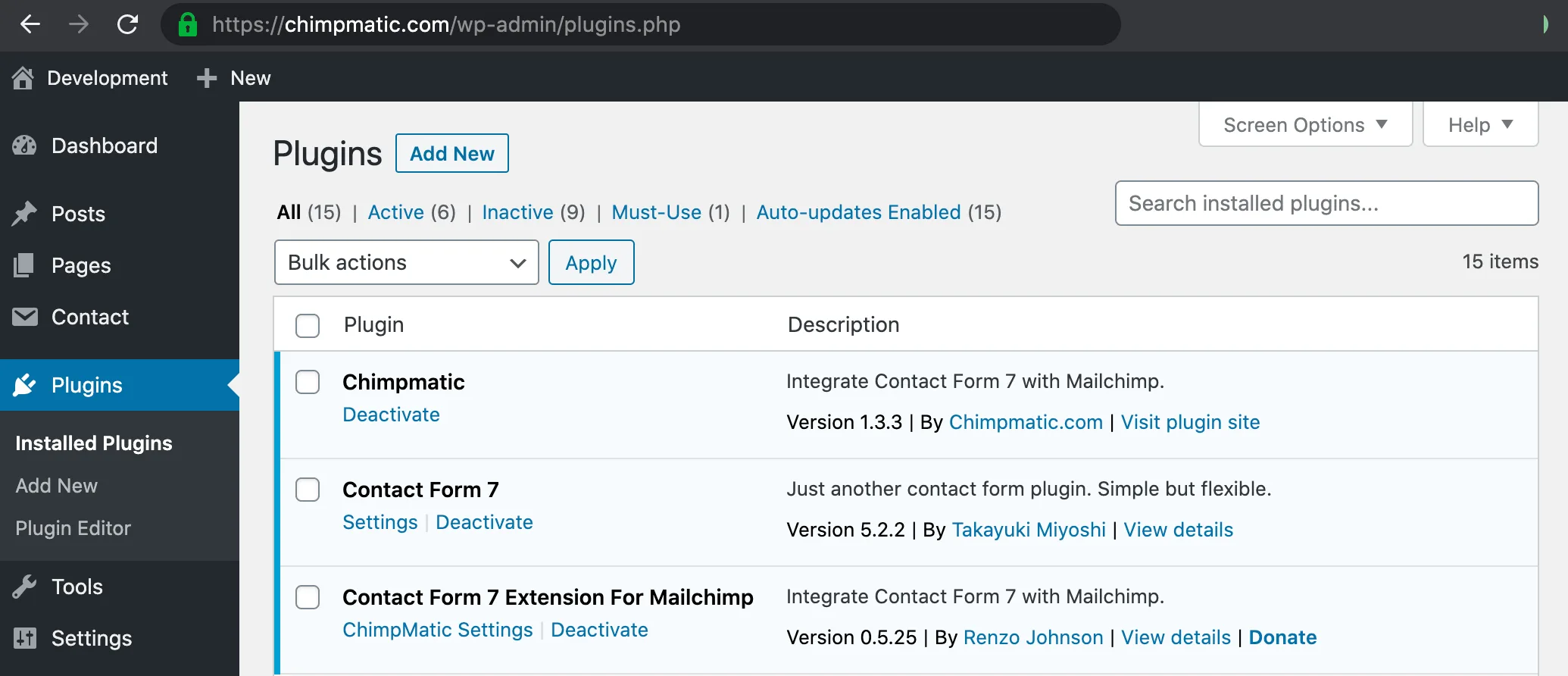
  1. Install and activate Chimpmatic (Lite or Pro) and Contact Form 7.
  2. Go to Contact → Contact Forms in WordPress and open the form you want to tag.
  3. Click the Chimpmatic tab in the form editor.
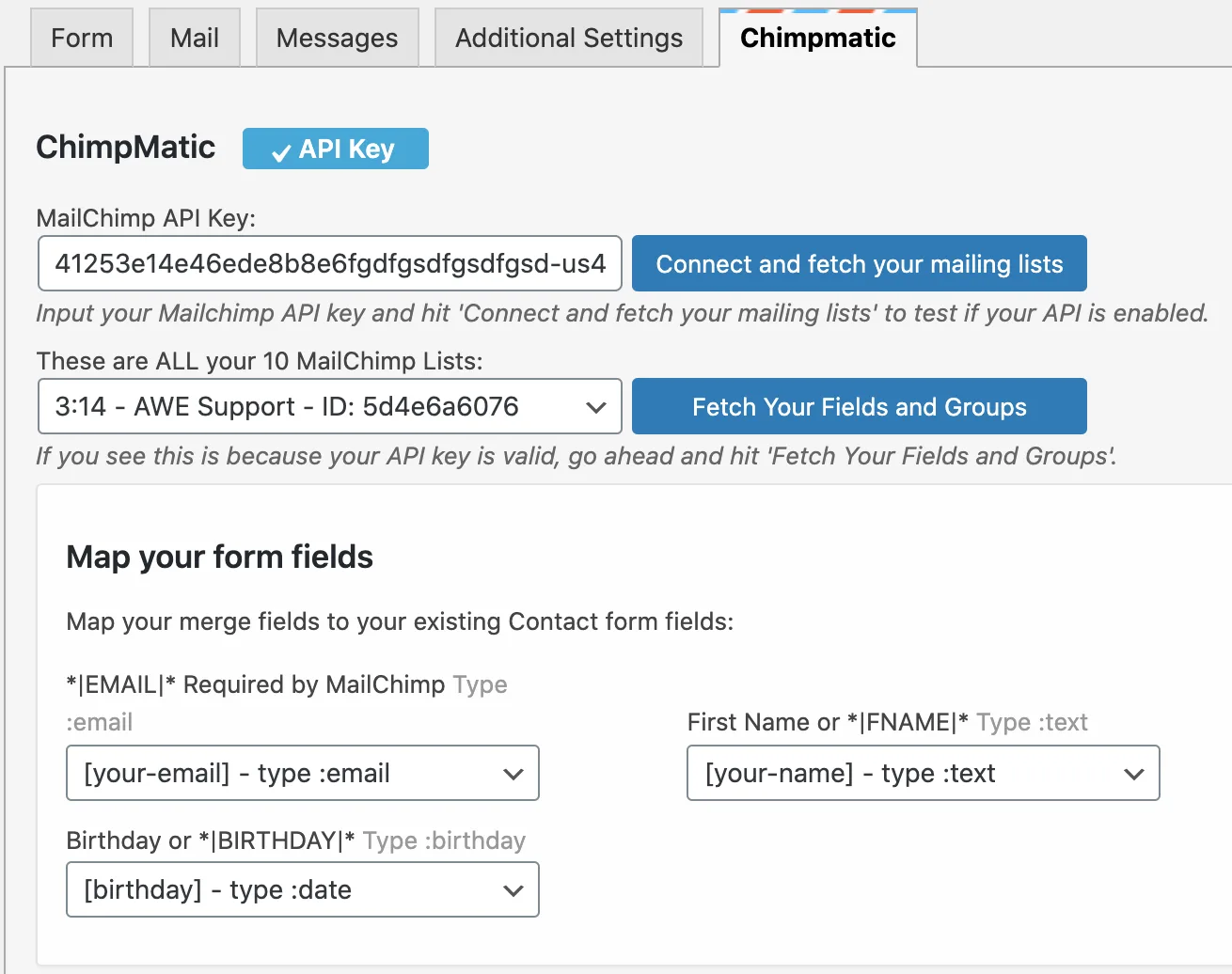
  4. Click Connect and Fetch Your Mailing Lists to load your Audiences.
  5. Select your Audience from the dropdown.
  6. Map your form fields to Mailchimp merge fields (EMAIL, FNAME, LNAME).
  7. In the Tags field, enter your tag name. For multiple tags, separate with commas: Newsletter, Source:Website.
  8. Click Save.

Every form submission now sends the subscriber to Mailchimp with the specified tag(s) applied automatically.

Dynamic Tag Setup (Pro Only)

  1. Open the CF7 form and click the Chimpmatic tab.
  2. Connect your Audience and map your fields (same as static setup).
  3. In the Tags field, use the CF7 mail-tag that corresponds to your dropdown, checkbox, or radio button field. For example: [department].
  4. Chimpmatic Pro resolves the mail-tag at submission time and applies the subscriber’s actual selection as the tag.
  5. Click Save.

Important: The tag that gets applied is the raw value from the form field. If your dropdown options are “Sales”, “Support”, “Billing” — those exact strings become the Mailchimp tags. Plan your form field values with this in mind.

Using Tags to Trigger Automations

Tags are the bridge between CF7 form submissions and Mailchimp automations. The flow works like this:

  1. Subscriber fills out your CF7 form.
  2. Chimpmatic sends their data to Mailchimp and applies the tag (e.g., Ebook-Requested).
  3. A Marketing Automation Flow in Mailchimp has “Tag added” as its trigger, listening for Ebook-Requested.
  4. Mailchimp detects the new tag and starts the automation: send email, wait, send another email, etc.

This is the mechanism behind every automated workflow — welcome sequences, lead magnet delivery, nurture campaigns, webinar reminders. For the full setup, see the CF7 Mailchimp Automation Guide.

Tags vs. “Signs Up” Trigger

Mailchimp also offers a “Signs up for email” automation trigger. The difference:

Trigger When It Fires Best For
Signs up for email Any new subscriber joins the Audience One generic welcome email for all new contacts
Tag added A specific tag is applied to a contact Per-form automations, targeted sequences, routing

If you have multiple forms feeding into one Audience, always use tag-based triggers. The “Signs up” trigger fires for every new subscriber regardless of which form they came from.

How Tags Work with Existing Subscribers

What happens when someone who is already in your Mailchimp Audience submits another CF7 form?

  • Chimpmatic does not create a duplicate. It finds the existing contact by email address and updates their profile.
  • The new tag is appended. If the subscriber already has tags Newsletter and Source:Website, and the new form applies Quote-Request, they now have all three tags.
  • Existing tags are never removed. Chimpmatic only adds tags — it never strips existing ones. To remove a tag, do it manually in Mailchimp or via an automation flow’s “Untag” action.
  • The automation triggers normally. If the Quote-Request tag is new for this contact, any “Tag added” automation listening for it will fire.

This means subscribers can accumulate tags over time as they interact with different forms on your site — building a richer profile with every interaction.

Tag Naming Conventions and Best Practices

Use a Prefix System

As your tag list grows, finding the right tag becomes difficult. A prefix system keeps tags alphabetically sorted and filterable in Mailchimp:

Prefix Purpose Examples
Source: Where the subscriber came from Source:Website, Source:Landing-Page, Source:Webinar
Interest: What topics they care about Interest:SEO, Interest:Email, Interest:Ads
Status: Where they are in the funnel Status:Lead, Status:Customer, Status:VIP
Form: Which CF7 form they submitted Form:Contact, Form:Quote, Form:Newsletter
Campaign: Which marketing campaign drove them Campaign:BF2026, Campaign:Spring-Sale

Tag Naming Rules

  • Keep names short and descriptive. Ebook-SEO-Guide is better than Downloaded_the_SEO_Guide_from_the_Website.
  • Use hyphens, not spaces. While Mailchimp allows spaces in tag names, hyphens are safer across integrations and avoid trailing-space mismatches.
  • Be consistent with casing. Mailchimp tags are case-insensitive for matching (Newsletter and newsletter are the same tag), but consistent casing makes your tag list readable.
  • Avoid generic names. Tag1, New, or Test become meaningless within weeks. Use descriptive names from day one.

Audit Your Tags Quarterly

Tags accumulate fast. Every quarter, review your Mailchimp tag list:

  1. Go to Audience → Manage Audience → Tags.
  2. Sort by contact count. Tags with 0 contacts are candidates for deletion.
  3. Look for near-duplicates (Newsletter vs newsletter-signup vs Newsletter-Signup).
  4. Merge similar tags by adding the canonical tag to affected contacts and removing the old one.
  5. Delete unused tags to keep the list clean.

Chimpmatic Lite vs. Pro for Tagging

Feature Lite (Free) Pro
Static tags (same tag for every submission) Yes Yes
Multiple static tags (comma-separated) Yes Yes
Dynamic tags (based on form field values) No Yes
Tags from dropdown selections No Yes
Tags from checkbox selections No Yes
Tags from radio button selections No Yes
Mailchimp Groups support No Yes
Multiple Audience sync No Yes
Per-form Double Opt-in override No Yes
Priority support No Yes

For tagging specifically: If every form needs just one fixed tag, Lite does the job perfectly. If you need a single form to apply different tags based on what the subscriber selects, you need Pro.

Compare plans and pricing →

Troubleshooting Tag Issues

Symptom Cause Fix
Subscriber appears in Mailchimp but without the tag Tags field left empty in Chimpmatic settings Edit the CF7 form, go to the Chimpmatic tab, enter the tag name, and save
Wrong tag applied to subscriber Tag name mismatch or wrong form linked Verify the tag in the Chimpmatic tab matches your intended tag exactly
Tag applied but automation does not fire Tag name mismatch between Chimpmatic and Mailchimp flow trigger Compare tags character by character; check for trailing spaces
Dynamic tags not working (shows mail-tag literal) Using Chimpmatic Lite (dynamic tags require Pro) Upgrade to Pro, or switch to static tags
Duplicate tags appearing in Mailchimp Inconsistent naming across forms Standardize tag names; merge duplicates in Mailchimp
Subscriber is Pending and tag seems missing Double Opt-in is enabled; tag is applied but hidden until confirmation Tag is there — check after subscriber confirms. See DOI guide

Missing Tag Fix

Open the CF7 form in WordPress, click the Chimpmatic tab, and check the Tags field. If it is blank, enter your tag name and save. Subscribers added before the tag was configured will not be retroactively tagged — you need to manually tag them in Mailchimp or have them re-submit the form.

Wrong Tag Fix

If subscribers are getting the wrong tag, check two things: (1) Make sure you are editing the correct CF7 form — if you have multiple forms, each one has its own Chimpmatic tab with its own tag setting. (2) Check the tag text for typos. Copy the tag from the Chimpmatic tab and paste it into Mailchimp’s tag search to verify they match.

Tag Exists but Automation Does Not Fire

The tag name in Chimpmatic and the tag selected in your Mailchimp automation flow trigger must match exactly. Mailchimp tags are case-insensitive (Newsletter and newsletter match), but trailing spaces or invisible characters will prevent matching. Delete and re-type the tag in both places. Also verify the automation flow status is Active, not Draft or Paused.

Dynamic Tags Not Working

If the Tags field contains a mail-tag like [department] and Mailchimp shows the literal text “[department]” as the tag instead of the actual value, you are using Chimpmatic Lite. Dynamic tag resolution (replacing mail-tags with form field values) is a Pro-only feature. Either upgrade to Pro or switch to static tags.

Duplicate Tags Fix

If you see similar tags like Newsletter, newsletter-signup, and Newsletter Signup in your Mailchimp Audience, they were created by different forms with inconsistent naming. To fix: choose one canonical tag name, add it to all affected contacts, remove the old tags, and update all CF7 forms to use the canonical name. Follow the naming conventions section to prevent this going forward.

Pending Subscriber Tag Fix

When Double Opt-in is enabled, Chimpmatic still applies the tag to the subscriber’s profile at submission time. However, the subscriber’s status is Pending until they confirm. The tag is there — but automation flows with a “Tag added” trigger may not fire until the subscriber’s status changes to Subscribed. This is expected Mailchimp behavior, not a bug.

FAQ

How do I tag Contact Form 7 subscribers in Mailchimp?

Install the Chimpmatic plugin, open your CF7 form, click the Chimpmatic tab, connect your Mailchimp Audience, and enter a tag name in the Tags field. Every form submission now applies that tag to the subscriber’s Mailchimp profile automatically.

What is the difference between Mailchimp tags and groups?

Tags are internal labels invisible to subscribers — you use them for categorization, tracking, and automation triggers. Groups are subscriber-facing options that can appear on signup forms as checkboxes or dropdowns. Use tags for anything the subscriber should not see; use groups for anything they should choose.

Can I add multiple tags to one form?

Yes. Enter multiple tag names separated by commas in the Chimpmatic Tags field. For example: Newsletter, Source:Website, Interest:Email. All three tags will be applied to every subscriber who submits that form.

Can I assign different tags based on dropdown selections?

Yes, with Chimpmatic Pro. Use the CF7 mail-tag for your dropdown field (e.g., [department]) in the Tags field. Pro resolves the mail-tag at submission time and applies the subscriber’s actual selection as the tag. Lite does not support this.

Are Mailchimp tags case-sensitive?

No. Mailchimp treats Newsletter and newsletter as the same tag when matching. However, the display name preserves the casing of the first version created. For consistency, always use the same casing across all your forms.

Do tags trigger Mailchimp automations?

Yes. Mailchimp Marketing Automation Flows support a “Tag added” trigger. When Chimpmatic applies a tag to a subscriber, any flow listening for that tag fires automatically. See the Automation Guide for the full setup.

What happens to tags when a subscriber already exists?

Chimpmatic appends new tags to the existing subscriber profile without removing any current tags. The contact keeps all previously applied tags plus the new ones from the latest form submission.

How do I remove a tag from a subscriber?

Chimpmatic only adds tags — it does not remove them. To remove a tag, go to the subscriber’s profile in Mailchimp and delete the tag manually. You can also use a Mailchimp automation flow’s “Untag” action to remove tags automatically as part of a workflow.

Why are my tags not appearing in Mailchimp?

Three common causes: (1) The Tags field in the Chimpmatic tab is empty — enter a tag name and save. (2) You are using Chimpmatic Lite with a mail-tag like [department] — dynamic tags require Pro. (3) The subscriber has not been added yet — submit a test form and check Mailchimp.

Can I use tags to send campaigns to specific subscribers?

Yes. When creating a campaign in Mailchimp, you can target subscribers by tag. Go to the recipient selection step and choose “Tag” as a segment condition. You can combine multiple tag conditions (e.g., contacts tagged Source:Website AND Interest:SEO) for precise targeting.

Is there a limit on how many tags I can use?

Mailchimp does not impose a hard limit on the number of tags per Audience or per contact. However, for practical management, keep your tag list under 50 active tags and follow a naming convention to stay organized.

How do I see which tags a subscriber has?

In Mailchimp, go to Audience → All contacts, click on a subscriber’s email address to open their profile, and scroll to the Tags section. You will see every tag currently applied to that contact.

Next Steps

Tagging strategy depends on the underlying connector — see Chimpmatic for Contact Form 7 + Mailchimp.

Posted on

MailChimp Double Opt-in

The Opt-in Checkbox feature was added to Contact Form 7 MailChimp Extension so you can give your visitors the option to opt-in / opt-out to subscribe to your mailing list(s).

Using the Contact Form 7 MailChimp Extension Opt-in Checkbox feature, is super simple. Take a look a the screenshots below:

To generate a form such as this one below:

Subscribe me your newsletter

Configure your form the same way you see it on this screenshot. Notice this mail tag inside the form: [checkbox my-optin “Subscribe me your newsletter”]

Form

Add this mail-tag [my-optin] to the settings of Contact Form 7 MailChimp Extension as in the screenshot below:

ChimpMatic Lite API Key

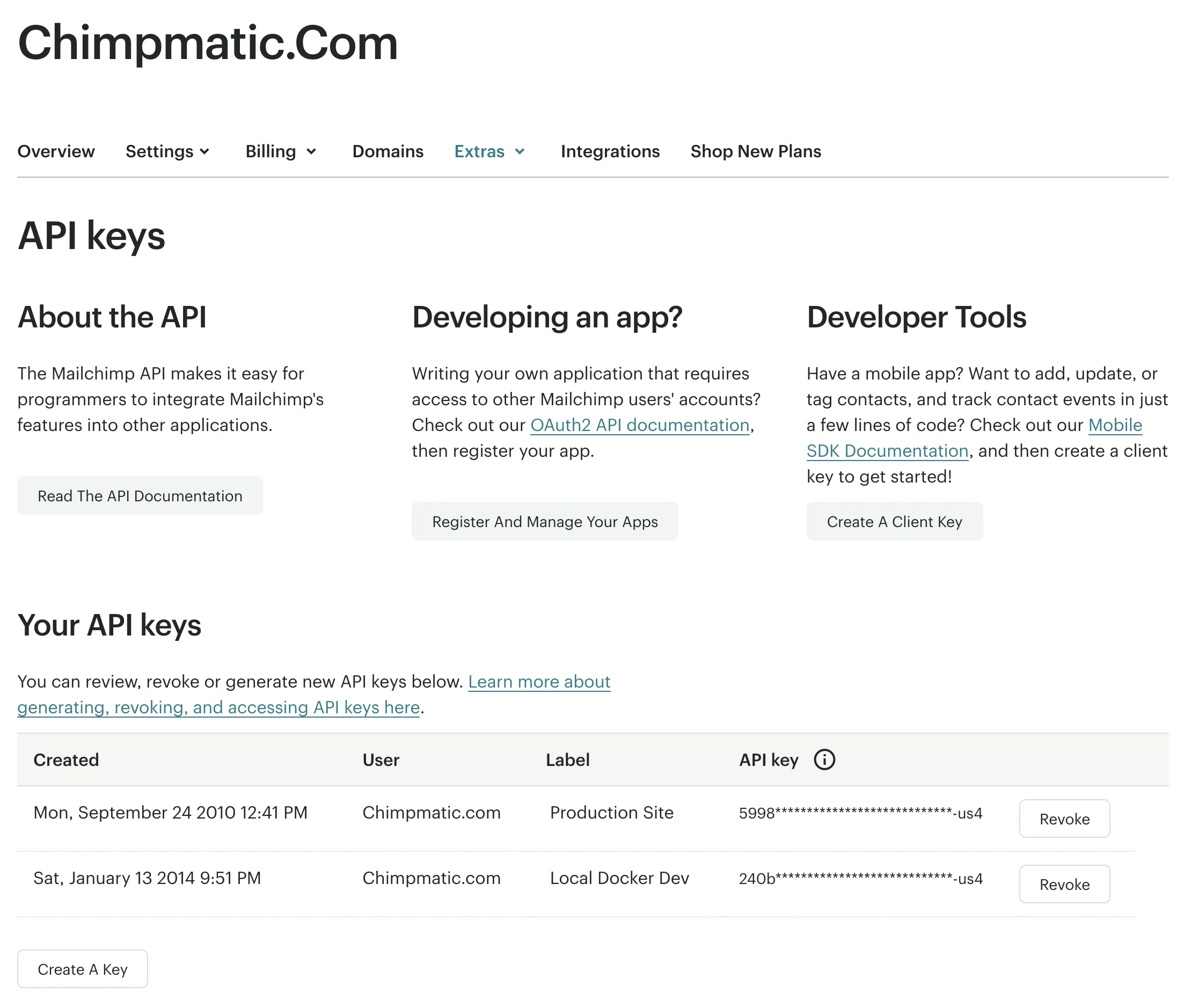
Find your Mailchimp API here

Hit the Connect button to load your lists Learn More

MUST be an email tag Learn More

This may be sent as Name Learn More
Add the mail-tag [my-optin] under Advanced Settings in the Required Acceptance text fields:
Required Acceptance
Required Acceptance

After these steps have been done, save your form and run some tests.

Posted on

Mailchimp Replace Groups Explained

Mailchimp Groups Explained (Chimpmatic + Contact Form 7)

Mailchimp Groups are built for preference-style organization: they let subscribers self-categorize into interest or preference buckets inside a single Audience. In Chimpmatic, you can map your Contact Form 7 (CF7) checkboxes and radio buttons directly to Mailchimp Group Categories—so the visitor’s choices become Group selections in Mailchimp.

SEO keywords: Mailchimp Groups WordPress, Mailchimp Groups Contact Form 7, CF7 Mailchimp Groups, Contact Form 7 Mailchimp integration, Chimpmatic Replace Groups, Mailchimp group categories, Mailchimp interests groups

What are Mailchimp Groups?

Mailchimp Groups are a special kind of audience field designed for organizing contacts by interests and preferences. Think of them as named options inside a category, like:

  • Group Category: “Hobbies”
  • Group Names (options): “Cooking”, “Running”, “Photography”

Groups are often used when you want subscribers to choose what they want—like newsletter topics, product interests, or communication preferences.

Groups vs Tags vs Segments (don’t mix these up)

  • Groups = structured preferences inside categories (great for “let the subscriber choose”).
  • Tags = flexible labels you apply (great for internal organization and events/behavior).
  • Segments = saved filters that pull contacts based on rules (can use tags, groups, fields, activity, etc.).

Practical rule: if the data is a preference center type of choice, use Groups. If it’s an internal label or event marker, use Tags. Use Segments to target combinations of either.

How Chimpmatic maps CF7 fields to Mailchimp Groups

Chimpmatic’s “Groups” screen is built specifically for mapping your form’s checkboxes and radio buttons to Mailchimp’s Group Categories.

What you see on the “Groups for [Form]” screen

  • Each row represents a Mailchimp Group Category (example: “Colors”, “Hobbies”, “Preferences”).
  • Chimpmatic shows the category’s internal ID and the category type (checkboxes or radio).
  • You choose which CF7 field should populate that category using the dropdown labeled “Choose…”.

What the mapping actually does

When a visitor submits your CF7 form:

  1. The visitor selects options in a checkbox or radio field on the front end.
  2. Chimpmatic reads those selected values.
  3. Chimpmatic sends those selections to Mailchimp as Group selections inside the mapped Group Category.

In other words, the visitor is effectively setting their Mailchimp “preferences” via your WordPress form.

The Replace Groups toggle (same behavior concept as Sync Tags)

The Replace Groups toggle controls whether Chimpmatic should replace a contact’s group selections with the new submission, or simply add selections without removing older ones.

Replace Groups = ON (replace)

Chimpmatic treats the submission as the new source of truth and replaces the contact’s group selections for the mapped Group Categories with the submission’s current choices.

Use this when group choices represent a current preference (newsletter topics, content interests, contact preferences).

Replace Groups = OFF (add)

Chimpmatic adds the selected group options but does not remove previous selections. This is less common for preference centers, but can make sense when you want “ever-selected” style accumulation.

Use this only when you understand the long-term effect: contacts may end up belonging to many group options over time.

Quick rule: Preferences → Replace ON. Accumulating history → Replace OFF.

Real examples (WordPress + CF7 → Mailchimp Groups)

Example 1: Newsletter topics (checkbox groups)

Mailchimp Group Category: “Topics” (type: checkboxes)

Group Names: “WooCommerce”, “Contact Form 7”, “Email Deliverability”, “Automation”

CF7 field: [checkbox topics "WooCommerce" "Contact Form 7" "Email Deliverability" "Automation"]

Mapping: Topics → CF7 “topics” checkbox field

Replace Groups: ON (subscribers update their topics)

Example 2: Preferred contact method (radio groups)

Mailchimp Group Category: “Preferences” (type: radio)

Group Names: “Email”, “SMS”, “Phone”

CF7 field: [radio contact-method use_label_element "Email" "SMS" "Phone"]

Mapping: Preferences → CF7 “contact-method” radio field

Replace Groups: ON (radio implies one active choice)

Example 3: Hobby list (checkbox groups)

Mailchimp Group Category: “Hobbies” (type: checkboxes)

CF7 field: [checkbox hobbies "Cooking" "Running" "Photography"]

Replace Groups: ON (user can change selections later)

Best practices (so Groups stay useful)

  • Keep Group Categories limited. Groups are for structured preferences, not everything.
  • Use groups for subscriber choices. If the subscriber should control it, groups are a great fit.
  • Match the Group Category type to the CF7 field type.
    • Checkbox category ↔ CF7 checkbox field
    • Radio category ↔ CF7 radio field
  • Don’t use Groups for personal data. Names, phone, address belong in fields, not groups.
  • Prefer Replace Groups ON for preference-center behavior to avoid “sticky” old preferences.

FAQ

Can contacts choose Mailchimp Groups themselves?

Yes. Groups are designed for self-categorization (preferences/interests) and often appear on signup or preference forms. Chimpmatic lets you collect those choices in WordPress via CF7 and send them to Mailchimp.

Why not just use tags instead of groups?

Tags are flexible labels (often internal). Groups are structured choices under categories and are commonly used as a preference center. If you want subscribers to select interests, Groups are usually the cleaner model.

What does Replace Groups do in Chimpmatic?

ON replaces group selections for the mapped categories with the latest submission. OFF adds selections without removing previous ones.

Can I segment campaigns by Groups?

Yes. In Mailchimp, group preferences can be used to build segments and target sends to specific interests.

Next step

  1. Create your Group Categories and Group Names in Mailchimp (example: Topics → WooCommerce, CF7, Automations).
  2. Build matching CF7 checkbox/radio fields with the same option names.
  3. In Chimpmatic, map each Mailchimp Group Category to the correct CF7 field.
  4. Set Replace Groups ON for preference-center behavior.
  5. Submit a test form and verify the contact’s Groups in Mailchimp.
Posted on

Mailchimp Sync Tags Explained

Mailchimp Tags Sync Explained (Chimpmatic + Contact Form 7)

Generate Mailchimp audience tags dynamically from Contact Form 7 submissions in WordPress—then choose whether to replace tags or add tags with one toggle.

SEO keywords: Mailchimp tags WordPress, Mailchimp tags Contact Form 7, CF7 Mailchimp tags, Contact Form 7 Mailchimp integration, Chimpmatic tags sync, auto-tag Mailchimp contacts

What this post covers

  • What the Chimpmatic Tags screen does
  • How CF7 mail-tags become Mailchimp Tags
  • What Sync Tags means (replace vs add)
  • Best practices for WooCommerce/WordPress sites (without creating tag chaos)
  • Real examples you can copy

What are Mailchimp Tags?

Mailchimp Tags are labels you apply to contacts inside your Mailchimp Audience. They’re commonly used for segmentation and targeting—like labeling contacts by interest, source, preference, or consent. Tags are not the same thing as merge tags (merge tags are placeholders used in email content personalization).

Common confusion: Tags organize contacts. Merge tags personalize email text. Different features.

How Chimpmatic turns CF7 submissions into Mailchimp tags

In Contact Form 7, each field can expose a mail-tag (example: [country] or [interests]). When a visitor submits the form, those mail-tags resolve into real values (whatever the visitor selected or typed).

Chimpmatic’s Tags screen lists the available mail-tags for your form (examples you might see):

  • [country] (select)
  • [contact-method] (radio)
  • [interests] (checkbox)
  • [referral-source] (select)
  • [GDPR] (checkbox)
  • Plus text/number fields like [first-name], [phone-number], [your-age], etc.

You can add these mail-tags to your Chimpmatic settings so that when a visitor chooses options on the front end, Chimpmatic sends those chosen values to Mailchimp as Tags.

Why this is powerful: You don’t need to manually tag contacts. Your form becomes a tagging engine—every submission can automatically categorize the contact for segmentation and automations.

The “Arbitrary Tags” field (static tags you always apply)

The Arbitrary Tags input is for tags you want applied on every submission—useful for consistent source tracking and lifecycle labeling.

Examples:

source:cf7, form:lalito, lifecycle:lead

You can also mix static text with mail-tags (dynamic values):

source:cf7, form:lalito, country:[country], ref:[referral-source]

That gives you predictable tags (like source:cf7) plus dynamic tags that match what the visitor selected.

Sync Tags toggle: Replace tags vs Add tags

This is the most important setting on the page.

Sync Tags = ON (replace)

Tags sent replace existing tags (for the tag set Chimpmatic is sending). This is ideal when tags represent a current state that can change over time.

  • Interests can change
  • Preferred contact method can change
  • Consent can change (depending on your workflow)
Use Sync Tags ON when you want Mailchimp tags to match the visitor’s latest submission.

Sync Tags = OFF (add)

Tags are added (appended). Chimpmatic won’t remove older tags. This is ideal when tags represent an event or milestone you want to keep forever.

  • Requested a quote
  • Downloaded a lead magnet
  • Attended a webinar
  • Purchased a product (WooCommerce)
Use Sync Tags OFF when tags should be cumulative—once added, they should stick.
Quick rule: Preferences → Sync ON. Events → Sync OFF.

Best practices: what should become a Mailchimp tag?

Tags work best for a limited set of repeatable values—things you’ll actually segment or automate on.

Recommended fields to tag

  • Select fields (SEL): country, referral source
  • Radio fields (RAD): contact method
  • Checkbox fields (CHK): interests, consent

Avoid tagging personal data

Even though the UI lists mail-tags like [first-name] and [phone-number], turning personal data into tags usually creates clutter and (depending on your policies) can be a privacy risk. Names/phone/address are typically better stored as Mailchimp fields rather than tags.

Avoid tag spam: Don’t generate one-off tags like “John”, “Maria”, or full street addresses. Tags should be categories, not identity.

Copy/paste examples for WordPress + CF7

Example 1: Lead form segmentation (recommended)

Goal: Tag leads by interests + source so you can send targeted follow-ups.

Arbitrary Tags:

source:cf7, form:contact, lifecycle:lead

Dynamic tags to include: [interests], [referral-source], [contact-method]

Sync Tags: ON (preferences may change)

Example 2: Quote request event tag (append-only)

Goal: Mark that a contact requested a quote (keep forever).

Arbitrary Tags:

source:cf7, form:quote, event:quote-request

Dynamic tags: optional [referral-source]

Sync Tags: OFF (event tags should not be removed)

Example 3: GDPR/consent tagging

Goal: Label contacts who checked your consent box.

Arbitrary Tags:

source:cf7, form:signup

Dynamic tags: [GDPR]

Sync Tags: ON (if you want the latest consent status reflected)

WooCommerce note: tags for customers (if applicable)

If you also tag WooCommerce buyers (orders, products, categories), those tags usually behave like events—meaning Sync Tags OFF is often the safer default so you don’t accidentally remove “purchased” history when preferences change later.

FAQ

Can Chimpmatic generate Mailchimp tags from Contact Form 7 fields?

Yes. Chimpmatic exposes your form’s CF7 mail-tags so you can include them in the Tags settings. When a visitor submits the form, those mail-tags resolve into real values and can be sent to Mailchimp as tags.

What does “Sync Tags” mean?

ON: tags sent replace the existing tags (for the generated set). OFF: tags are added (appended) and nothing is removed.

Which CF7 fields make the best tags?

Select, radio, and checkbox fields are best (country, referral source, interests, contact preference, consent). Free-text personal fields (name/phone/address) should usually not become tags.

How should I name tags so they stay organized?

Use consistent prefixes like source:, form:, interest:, pref:, event:. This prevents collisions and keeps your segments readable.

Next step

Open your Chimpmatic form integration, go to Tags, add a few static tags in Arbitrary Tags, then include only the dynamic CF7 mail-tags that have controlled values (interests/source/preference/consent). Decide whether you want Sync Tags ON (replace) or OFF (add) based on whether those tags represent preferences or events.

Tip for support docs: If a customer reports “too many tags,” it almost always means they tagged personal/free-text fields (names/addresses) instead of controlled option fields (checkbox/select/radio).

Posted on

Contact Form 7 Setup: Quick Start Guide for WordPress

Contact Form 7 is one of the most popular WordPress plugins for adding contact forms to your website. In fact, this Contact Form 7 setup guide will have your first form working in under five minutes. Additionally, you will learn how each tab in the form editor works and how to connect your form to Mailchimp using Chimpmatic.

Installing Contact Form 7

If you have not installed Contact Form 7 yet, the process is straightforward:

  1. In your WordPress dashboard, go to Plugins > Add New.
  2. Search for “Contact Form 7”.
  3. Click Install Now, then click Activate.

After activation, a new Contact menu item appears in your WordPress sidebar. As a result, you can now create and manage all your forms from this menu.

Creating Your First Form

Go to Contact > Add New to create a new form. Contact Form 7 gives you a default form template with four fields already in place. Specifically, the default form includes:

  • [text* your-name] — The visitor’s name (required).
  • [email* your-email] — The visitor’s email address (required).
  • [text your-subject] — The email subject line (optional).
  • [textarea your-message] — The message body (optional).

Moreover, the asterisk (*) after the tag type means the field is required. In other words, visitors must fill in that field before they can submit the form.

The Form Tab

The Form tab is where you build your form structure. Furthermore, every field in your form uses a mail-tag — a shortcode-like tag enclosed in square brackets.

For example, the default Contact Form 7 setup looks like this:

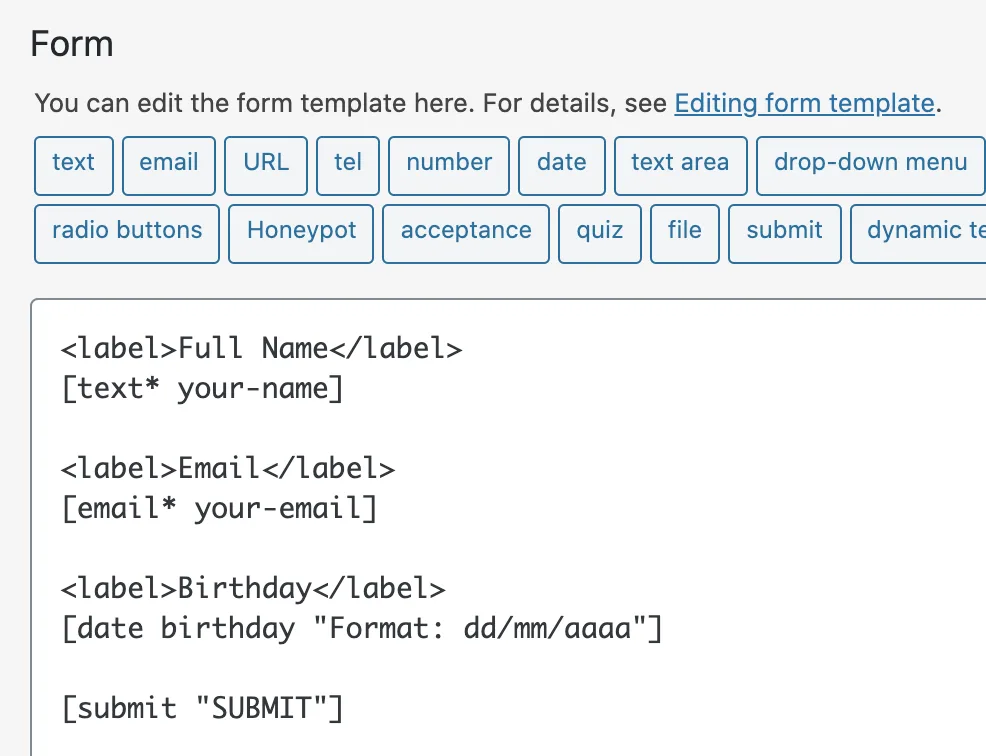
Form

<label> Your Name (required)
    [text* your-name] </label>

<label> Your Email (required)
    [email* your-email] </label>

<label> Subject
    [text your-subject] </label>

<label> Your Message
    [textarea your-message] </label>

[submit "Send"]

You can add more fields by clicking the tag generator buttons at the top of the Form tab. In particular, Contact Form 7 supports text fields, email fields, URLs, phone numbers, dates, checkboxes, radio buttons, dropdown menus, and file uploads.

The Mail Tab

The Mail tab controls what happens when someone submits your form. Specifically, it defines the email notification that WordPress sends to you. The key settings are:

  • To: The email address that receives form submissions. By default, this is your WordPress admin email.
  • From: The sender address shown in the notification email.
  • Subject: The email subject line. Use the [your-subject] mail-tag to include the visitor’s subject.
  • Message Body: The email content. Insert mail-tags like [your-name], [your-email], and [your-message] to include the form data.

Consequently, every mail-tag you create in the Form tab becomes available in the Mail tab. If you add a field called [text your-company] in the Form tab, you can use [your-company] in the Mail tab to include that value in the notification email.

Understanding Mail-Tags

Mail-tags are the bridge between your form fields and email notifications. However, they also play a critical role when connecting to Mailchimp. Each mail-tag corresponds to one form field, and Chimpmatic uses these same mail-tags to map data to your Mailchimp audience fields.

For instance, the mail-tag [your-email] captures the visitor’s email address. In short, this is the same value that Chimpmatic sends to Mailchimp as the subscriber’s email. Similarly, [your-name] maps to the subscriber’s first name or full name in Mailchimp.

Embedding the Form on a Page

After saving your form, Contact Form 7 generates a shortcode at the top of the editor.

Copy this shortcode and paste it into any page or post where you want the form to appear. As a result, visitors to that page will see your contact form and can submit their information immediately.

Connecting to Mailchimp

Once your Contact Form 7 setup is complete, you can connect the form to Mailchimp so every submission adds a subscriber to your audience. Chimpmatic handles this connection automatically.

The basic steps are:

  1. Install Chimpmatic (LITE or Pro).
  2. Open your form and click the Chimpmatic tab.
  3. Enter your Mailchimp API key.
  4. Select your Mailchimp audience.
  5. Map your CF7 mail-tags to Mailchimp merge fields.

For the complete walkthrough, see Connect Contact Form 7 to Mailchimp.

Troubleshooting Common Issues

Most importantly, if your form is not working as expected, check these common issues:

  • Form not sending emails. Check the Mail tab — make sure the “To” address is correct. Additionally, some hosting providers block the WordPress wp_mail() function. An SMTP plugin can fix this.
  • Required fields not validating. Confirm that required fields use the asterisk syntax, for example [text* your-name] instead of [text your-name].
  • Shortcode showing as text. Make sure you are pasting the shortcode in the Visual or Block editor, not inside an HTML block with escaped brackets.
  • Submissions not reaching Mailchimp. If Chimpmatic is installed but subscribers are not appearing, see Contact Form 7 Not Sending to Mailchimp for the most common fixes.

Next Steps